



-
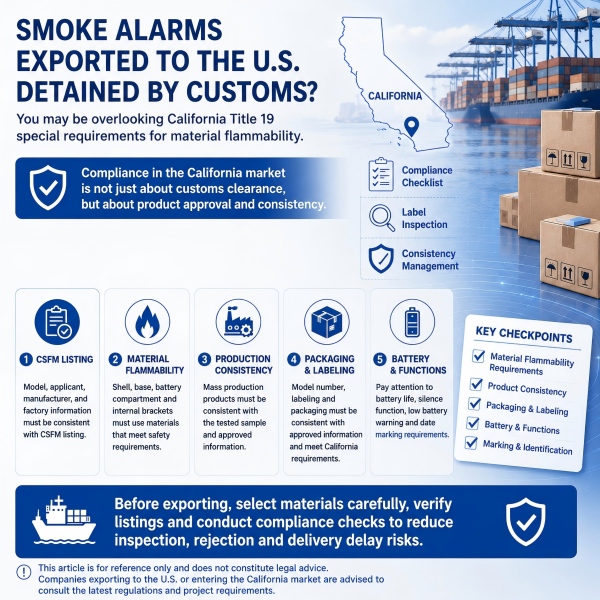
Smoke Alarms Exported to the United States Detained by Customs? You May Have Overlooked California Title 19 Requirements for Flame-Retardant Materials
A shipment of smoke alarms has been manufactured, and the product test documentation appears complete. Why might it still face inspection, rejection by the customer, removal from an online platform, or restrictions on use in a California project after entering the United States? Many companies fi...Read more -
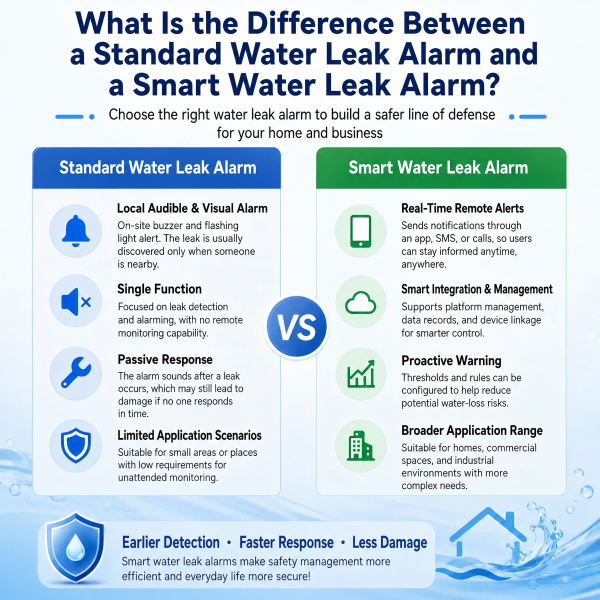
What Is the Difference Between a Standard Water Leak Alarm and a Smart Water Leak Alarm?
1. What Is a Standard Water Leak Alarm? A standard water leak alarm is typically a stand-alone water detection device. Metal sensing contacts are located on the bottom of the unit or on an external sensor cable. When water touches two sensing points at the same time, the alarm immediately activat...Read more -
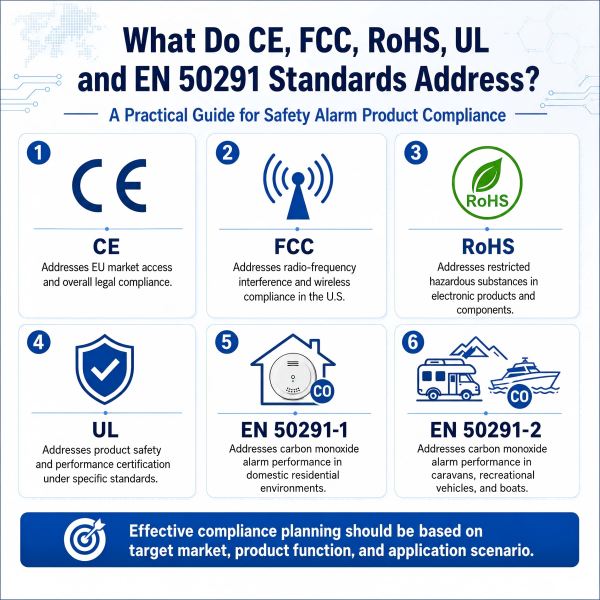
What Issues Do CE, FCC, RoHS, UL, and EN 50291-1/2 Address?
In the export of security alarm products, CE, FCC, RoHS, UL, EN 50291-1, and EN 50291-2 are often mentioned together. However, they address different issues, including market access, radio-frequency interference, environmental compliance of materials, product safety, and carbon monoxide alarm per...Read more -
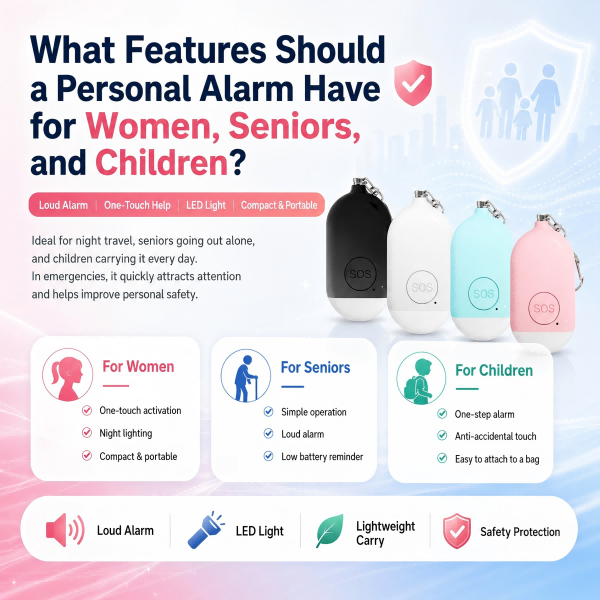
What Features Should a Personal Alarm Have for Women, Seniors, and Children?
As personal safety awareness continues to grow, personal alarms are becoming a common safety aid for women traveling at night, seniors going out alone, and children commuting to and from school. Personal alarms are usually compact and can be attached to keys, backpacks, belts, or other personal i...Read more -
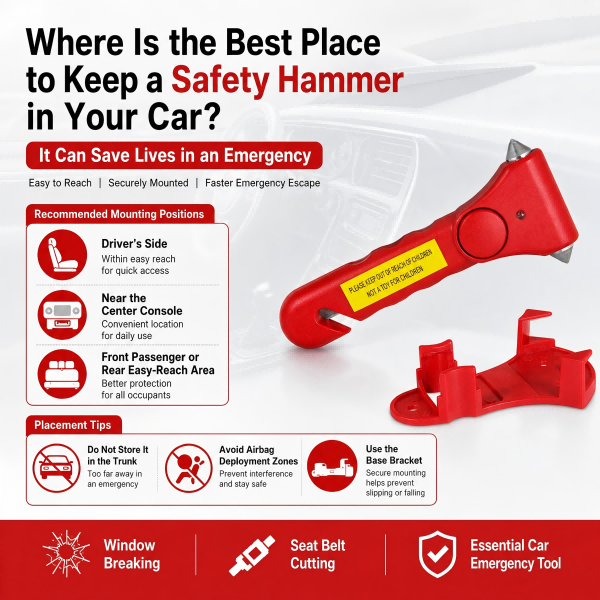
Where Is the Best Place to Keep a Safety Hammer in Your Car? It Could Save Your Life in an Emergency
As cars have become an essential part of everyday travel, more drivers are paying attention to in-vehicle emergency equipment. Fire extinguishers, first-aid kits, reflective vests, and safety hammers are among the most common emergency tools kept in a vehicle. A safety hammer is mainly intended f...Read more -
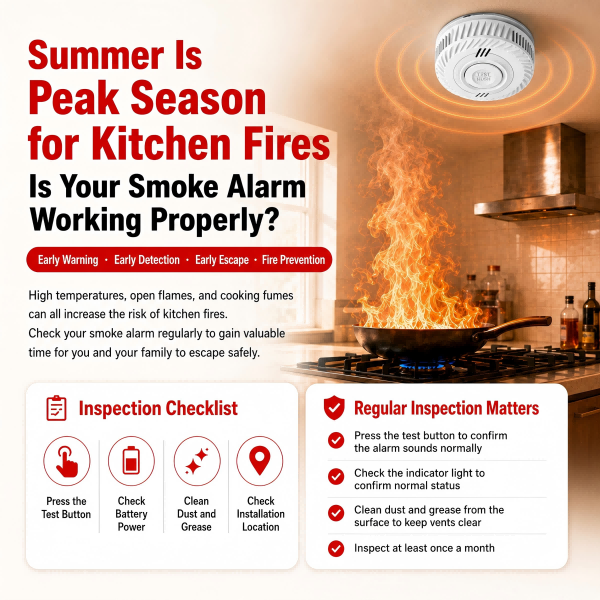
Summer Is Peak Season for Kitchen Fires: Is Your Smoke Alarm Working Properly?
As summer begins, temperatures rise and household electricity consumption increases. Air conditioners, refrigerators, induction cookers, ovens, and other appliances may run for extended periods, while heat, open flames, gas, and cooking oil further increase the risk of a kitchen fire. The kitchen...Read more