


Key Travel Safety Devices
Explore our top-tier personal security and alert systems engineered for portable protection in hotels, Airbnbs, and transit.
Industry Trends & Commercial Evolution
How IoT-enabled personal security hardware is reshaping the global tourism, corporate hospitality, and short-term rental markets.
The Shift Toward Decentralized and Portable Security
In recent years, the hospitality and travel sectors have undergone a structural paradigm shift. The explosive growth of peer-to-peer lodging platforms such as Airbnb, Vrbo, and Sonder has decentralized accommodation, exposing travelers to varying standards of physical security. Unlike traditional luxury hotels that implement centralized, 24/7 security desks and industrial-grade fire systems, temporary accommodations often rely on basic residential security measures. This discrepancy has driven a surge in consumer demand for smart personal alarms for travel and temporary accommodation.
Concurrently, the rise of the "digital nomad" lifestyle and solo female travel has created a demographic of highly safety-conscious consumers. These users require lightweight, plug-and-play security hardware that can transform any rented room into a secure sanctuary within minutes. Consequently, security device manufacturers are pivoting from hardwired home security packages to modular, battery-powered IoT devices that offer high portability without sacrificing enterprise-grade reliability.
Market research indicates that the portable personal safety device sector is projected to register a CAGR of over 8.5% through 2030. Key growth drivers include the integration of multi-protocol wireless chips (WiFi, Zigbee, BLE, Sub-1GHz RF) and the miniaturization of high-decibel acoustic alert mechanisms.
Emerging Technical Trends in Portable Alarms
From an engineering and manufacturing perspective, several critical trends are defining the next generation of smart personal alarms:
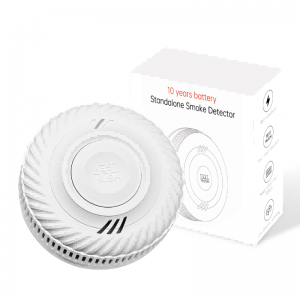
- Ultra-Low Power Microcontrollers (MCUs): Modern travel alarms must operate reliably for months or even years on standard coin-cell or compact lithium batteries. Advanced power management states allow devices like our 10-year battery smoke alarms to remain vigilant without frequent battery swaps.
- Multi-Sensor Fusion: A single device is no longer just a siren. Manufacturers are combining PIR motion sensors, high-sensitivity vibration detectors, ambient light sensors, and temperature probes into single pocket-sized form factors.
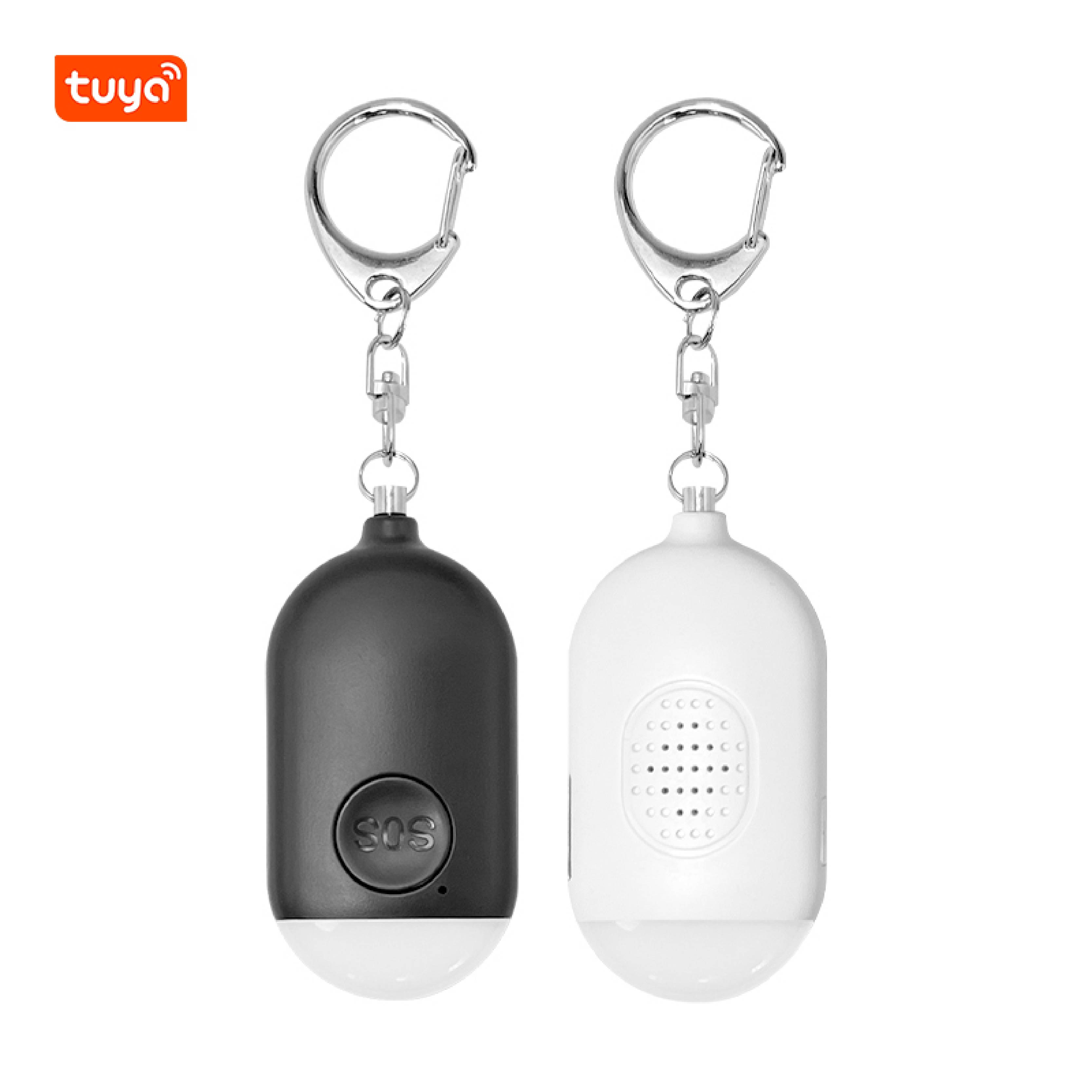
- Global Cloud Connectivity: By leveraging Tuya-based IoT ecosystems, modern travel alarms bypass complex local network setups. They connect seamlessly to global mobile networks via Bluetooth gateways or local Wi-Fi networks, sending instant push notifications to the user's smartphone if an intrusion or hazard is detected.
- Privacy Safeguards: With public concern rising over hidden surveillance in rental properties, specialized RF and optical detectors (such as anti-spy lens finders) have transitioned from niche law-enforcement tools to essential consumer travel accessories.
Deep Application Scenario Analysis
Examining how travelers and property managers deploy smart alarms to mitigate real-world security vulnerabilities.
Scenario A: The Short-Term Rental (Airbnb/Homestay) Safety Gap
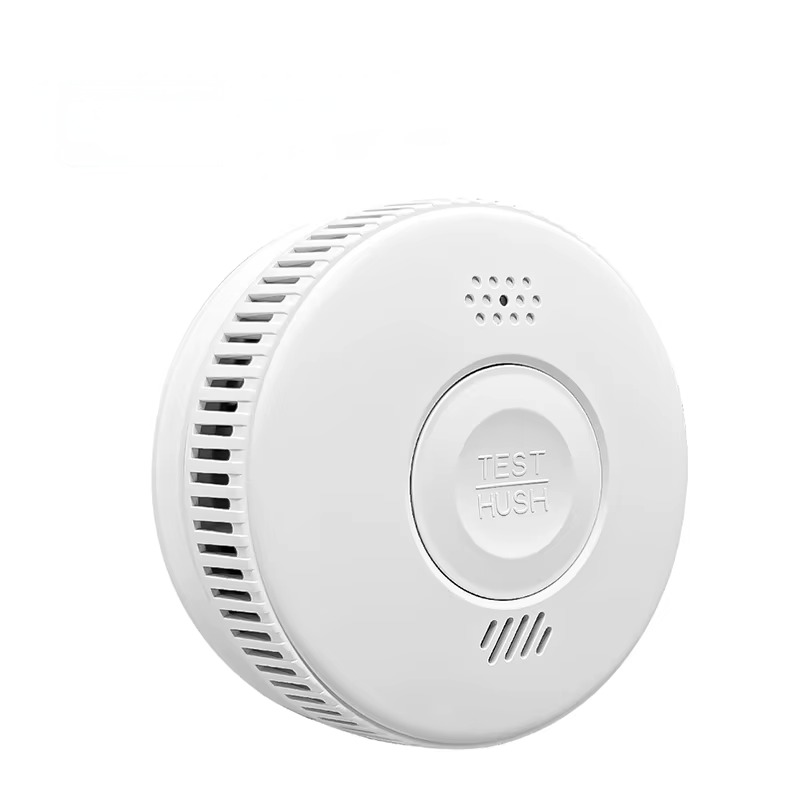
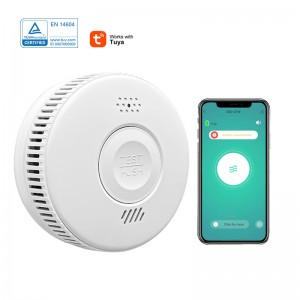
When renting a temporary home, guests have no way of verifying the maintenance history of safety systems. Smoke detectors might be expired, disabled by previous guests, or completely missing. Carrying a compact, certified photo-electric smoke alarm like the S100B-CR provides a personal life-safety backup. Placed on a bedside table or temporarily mounted, it ensures immediate notification of slow-smoldering fires, which are often the most lethal in residential settings.
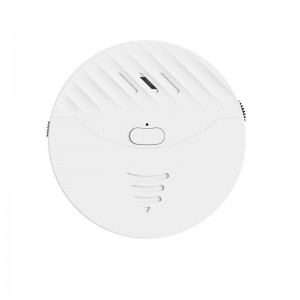
Furthermore, entry doors in residential rentals may have duplicate keys distributed to previous guests or cleaners. A portable vibration door sensor like the F03 can be easily hung on the inside door handle or stuck to the window frame. If anyone attempts to pick the lock, turn the handle, or force the door open, the sensor detects the structural vibration and triggers an ear-piercing local alarm while notifying the user's phone, providing critical seconds to react.
Scenario B: Solo Female Travel & Hostel Security
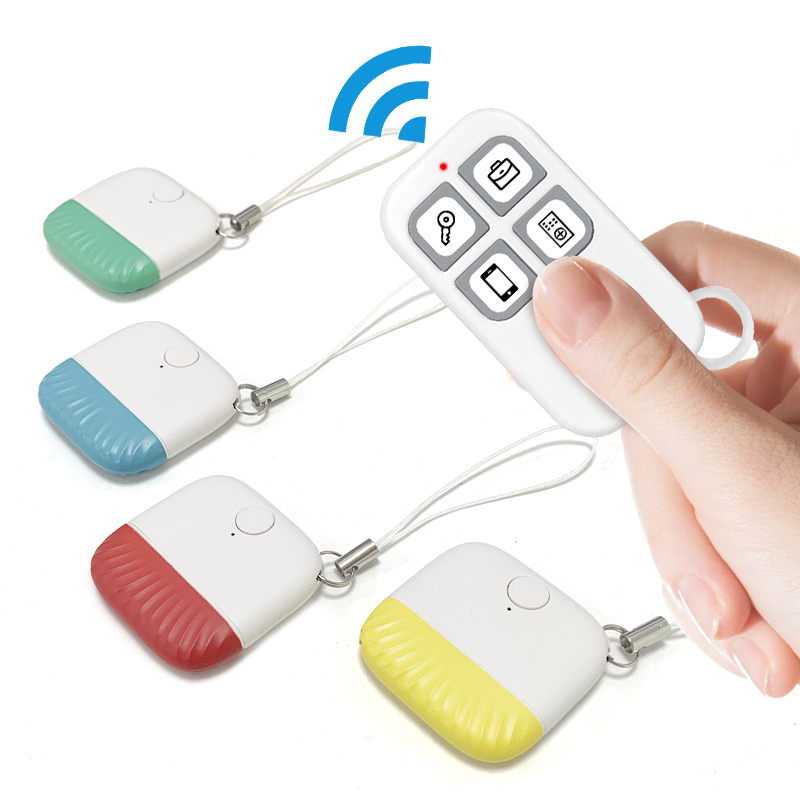
Solo travelers often stay in shared dorms or budget guest houses where personal lockers are insecure. The integration of Tuya Smart Tags (B500) allows travelers to secure their backpacks and luggage. If someone moves the backpack while the traveler is asleep or away, the motion sensor alerts the traveler via their smartphone. In transit hubs like airports or train stations, the anti-lost alert prevents opportunistic theft by sounding an alarm the moment the connection between the user's phone and their luggage is severed.
Scenario C: Corporate Travel & Privacy Protection in Business Hotels
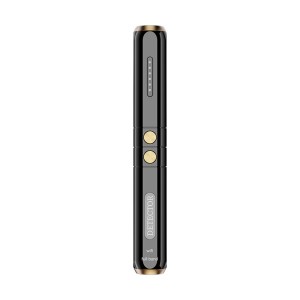
Corporate espionage and illicit surveillance are growing threats for business travelers handling intellectual property. Rogue cameras can be hidden in smoke detectors, alarm clocks, or wall outlets. Utilizing an upgraded anti-spy detector like the T13 enables professionals to scan their hotel rooms for RF transmissions and hidden camera lenses. This active defense step ensures that meetings, conversations, and personal privacy remain confidential throughout the business trip.
The T13 utilizes a combination of infrared LED reflection arrays to locate camera lenses (by detecting the reflective properties of the camera's curved glass) and high-frequency RF scanners to detect active wireless transmissions from hidden bugs operating on 1MHz to 6.5GHz bands.

About Ariza
We are a world-leading smart alarm ODM company, focusing on the field of security alarms for 16 years. Our services span more than 30 countries and regions, and cooperating with more than 3,000 global brand customers. We are deeply engaged in technological innovation and holding more than 60 patents. What’s more, we focus on quality and have passed TUV EN14604, EN50291, and mandatory CCC certification.
We work closely with Tuya-based smart home brands, IoT integrators, and security system developers to bring product concepts to life. Our OEM/ODM services cover everything from PCB-level customization to private label branding, helping clients reduce R&D time, lower production costs, and speed up go-to-market.
With certified Tuya WiFi and Zigbee modules, and support for RF 433/868 MHz protocols, Ariza ensures smooth integration into your smart ecosystems. Whether you're scaling retail channels or launching your own platform, our proven manufacturing and engineering support gives you an edge.
Learn More3 Simple Steps to Your Customized Security Devices
We provide fast, efficient, and precise customization services to make your experience stress-free and seamless.

1. Share Your Needs
Just tell us your ideas! Features, design, anything custom – we listen and understand your unique requirements to kickstart the process easily.

2. Design & Sample Approval
Review our detailed design plan and a physical sample. We provide a clear, transparent quote upfront. Your approval ensures we proceed exactly to your expectations.

3. Quality Control & Delivery
Once you approve, we handle everything smoothly – from precise production and branding to rigorous quality checks and timely, safe delivery of your customized products.
Our Partners
Cooperating with leading brands and IoT integrators globally to deliver reliable security hardware.






Future Outlook of Travel Security Technology
Exploring the technological horizon: AI integration, edge computing, and global roaming protocols.
Artificial Intelligence & Edge Computing in Personal Security
The future of smart personal alarms for travel and temporary accommodation lies in edge intelligence. Today's devices rely on basic threshold triggers—such as detecting a specific level of vibration or smoke obscuration. Tomorrow's hardware will feature edge-AI microprocessors capable of differentiating between a normal door knock and an attempted break-in. By analyzing acceleration waveforms in real-time, smart vibration sensors can minimize false alarms caused by wind or passing traffic while ensuring instant triggers for genuine security breaches.
Similarly, smart smoke detectors are evolving. By integrating multi-wavelength optical sensors, they can detect the difference between cooking steam and toxic synthetic fumes generated by burning plastics or electronics, which are common in budget accommodation fires. This level of precision is critical for travelers who need to avoid false alarms in rented spaces while maintaining absolute safety.
Integration with Unified Smart Home Standards
As the IoT industry converges around unified communication protocols like Matter and Thread, portable security hardware will become even more versatile. A traveler will be able to bring their own smart alarm devices and temporarily link them to the accommodation's local Matter hub. This allows the portable sensors to interact with the room's smart lighting and HVAC systems—for example, automatically flashing the lights red and shutting off air circulation if a fire is detected, or turning on entry lights if a vibration sensor detects a door opening at night.
At Ariza, our engineering team is actively researching Matter compatibility alongside our established Tuya WiFi and Zigbee solutions. By maintaining an agile R&D pipeline, we ensure that our OEM/ODM partners can quickly launch products that align with these evolving global standards.
Complete Travel Security & Smart Alarm Catalog
Select from our comprehensive portfolio of smoke detectors, asset trackers, door sensors, and privacy scanners.