


Featured Safety & Environmental Sensors

Understanding the Critical Role of Water Leak Sensors in Apartment Complexes
Water damage is one of the most persistent, destructive, and expensive liabilities facing modern residential properties, especially multi-family complexes, high-rise apartments, and condominium buildings. Unlike single-family homes, a leak on the top floor of an apartment building does not remain localized. Gravity ensures that water migrates downward, seeping through concrete slabs, tracking along electrical conduits, ruining drywall, and destroying personal belongings across multiple units underneath. The financial fallout from a single undetected leak can easily reach tens of thousands of dollars in property damage, temporary tenant relocation costs, mold remediation, and skyrocketing insurance premiums.
ℹ️ The High Cost of Water Damage in Multi-Family Housing
According to insurance industry data, water damage accounts for over 30% of all real estate insurance claims. For apartment property managers, implementing a proactive mitigation strategy built around smart IoT water leak sensors is no longer a luxury—it is an operational necessity that directly impacts the bottom line.
The Evolution of Residential Leak Detection: From Localized Buzzers to Connected IoT Ecosystems
Historically, water leak detection was limited to simple battery-powered buzzers placed under kitchen sinks or near water heaters. While effective if someone was home to hear the alarm, these devices were useless in vacant units, during working hours, or when tenants were traveling. If a pipe burst in an empty apartment, the leak would often go unnoticed until water began dripping through the ceiling of the unit below.
Today, the integration of Internet of Things (IoT) technologies has revolutionized residential security and damage prevention. Modern water leak sensors for apartments utilize advanced wireless communication protocols such as Wi-Fi, Zigbee, and LoRaWAN to provide real-time alerts. When moisture is detected, the sensor immediately transmits a signal to a cloud server, which sends instant push notifications, SMS alerts, or emails to both the resident and the property management team. This allows for immediate intervention, minimizing damage from hours to minutes.
Key Industrial & Commercial Trends in Residential Water Management
The PropTech (Property Technology) market is experiencing rapid growth, driven by the demand for smarter, safer, and more sustainable buildings. Several key trends are shaping the deployment of water leak sensors in apartments and residential properties:
- Insurance Mandates and Premium Discounts: Insurance providers are increasingly requiring property owners to install connected leak detection systems as a condition of coverage, or offering substantial premium discounts (often 10% to 25%) to buildings that proactively deploy these systems.
- Integration with Smart Valves: Advanced systems do not just alert stakeholders; they take action. Integrating wireless water sensors with automated main shut-off valves allows the system to automatically cut off the water supply to a unit the moment a leak is detected, completely neutralizing the threat.
- Unified Property Management Platforms: Modern property managers prefer consolidated dashboards. Leak sensors are now integrated directly into property management software (like Yardi, RealPage, or custom IoT hubs), allowing maintenance crews to track the health of hundreds of units from a single screen.
- Battery Longevity and Low-Power Protocols: Utilizing Zigbee or sub-GHz wireless channels ensures that sensors can run on standard lithium batteries for 3 to 5 years, reducing the maintenance overhead of battery replacement cycles for large property portfolios.
Deep Dive: Critical Installation Scenarios in Multi-Family Properties
To maximize the effectiveness of a residential water leak detection network, sensors must be strategically placed in high-risk zones. Understanding these micro-environments allows developers and property managers to deploy sensors where they will deliver the fastest response times.
1. Under-Sink and Appliance Monitoring
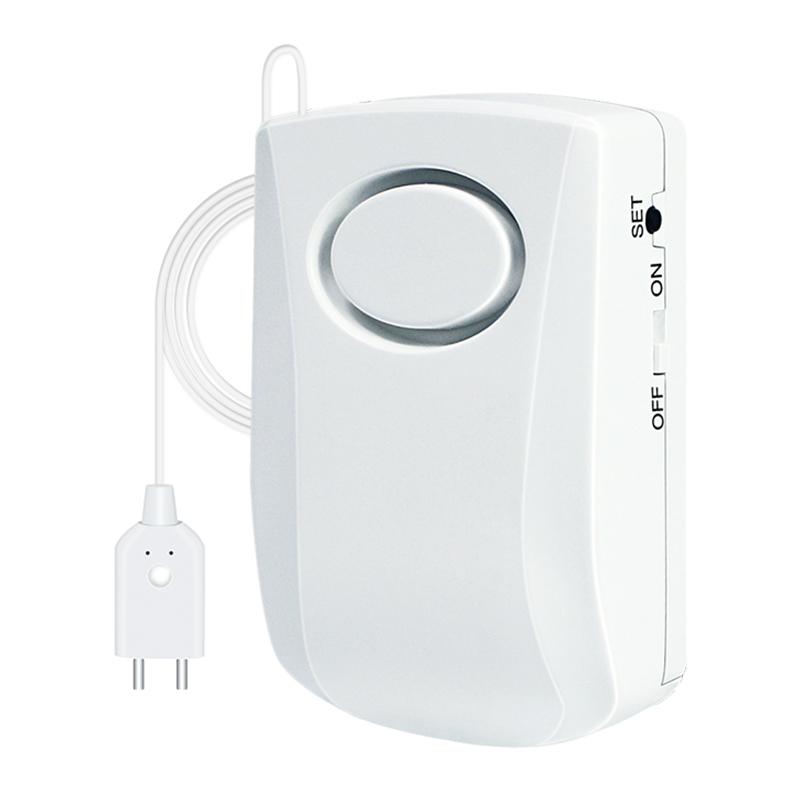
Kitchen sinks, bathroom vanities, washing machines, and dishwashers are the most common sources of slow, hidden leaks. Over time, loose fittings, cracked hoses, or failing seals can drip water behind cabinetry, leading to wood rot and hazardous mold growth before the tenant even notices. Placing a low-profile sensor like the AF9700 Wireless Water Leak Detector beneath these appliances ensures early detection of slow leaks.
2. HVAC Condensate Drain Pans
In hot and humid climates, apartment air conditioning units work constantly. If the condensate drain line becomes clogged with algae or debris, the overflow pan quickly fills and spills over. Since HVAC units in apartments are often located in utility closets above living spaces, an overflow can quickly ruin ceilings and floors. A water sensor placed directly in the auxiliary drain pan detects water accumulation instantly and can even be wired to shut down the AC unit to prevent further condensation.
3. Water Heaters and Boiler Rooms
Residential water heaters have a finite lifespan, typically failing after 8 to 12 years. When a tank ruptures, it can release hundreds of gallons of hot water in a matter of minutes. Placing a sensor in the safety pan beneath the water heater is one of the highest-yielding risk reduction strategies a property owner can implement.
4. Main Water Risers and Utility Shafts
In multi-story residential buildings, main water lines run vertically through utility shafts. A joint failure in one of these shafts can cause catastrophic damage across dozens of floors. Placing specialized rope sensors or spot detectors at the base of these shafts provides early warning of structural plumbing failures.
How Smart Sensors Protect Vacant Units and Tenant Turnover
Tenant turnover periods are high-risk windows for property owners. When an apartment sits empty during renovations or between leases, there is no occupant to notice a dripping faucet or a running toilet. A running toilet can waste thousands of gallons of water daily, drastically inflating utility bills in master-metered buildings. More critically, a sudden pipe burst in a vacant unit can go undetected for days. Deploying wireless sensors connected to a central building gateway ensures that vacant units remain monitored 24/7 without requiring manual daily inspections by maintenance staff.
🛡️ Advanced AI & Predictive Analytics in Water Detection
The future of water safety lies in predictive maintenance. Modern smart building networks analyze data from both flow meters and localized leak sensors. By comparing water flow patterns with sensor data, AI algorithms can distinguish between normal water usage (like a shower) and an abnormal continuous flow indicative of a hidden slab leak or a burst pipe, automatically flagging the anomaly for inspection.

About Ariza
We are a world-leading smart alarm ODM company, focusing on the field of security alarms for 16 years. Our services span more than 30 countries and regions, and cooperating with more than 3,000 global brand customers. We are deeply engaged in technological innovation and holding more than 60 patents. What’s more, we focus on quality and have passed TUV EN14604, EN50291, and mandatory CCC certification.
We work closely with Tuya-based smart home brands, IoT integrators, and security system developers to bring product concepts to life. Our OEM/ODM services cover everything from PCB-level customization to private label branding, helping clients reduce R&D time, lower production costs, and speed up go-to-market.
With certified Tuya WiFi and Zigbee modules, and support for RF 433/868 MHz protocols, Ariza ensures smooth integration into your smart ecosystems. Whether you're scaling retail channels or launching your own platform, our proven manufacturing and engineering support gives you an edge.
3 Simple Steps to Your Customized Security Devices
We provide fast, efficient, and precise customization services to make your experience stress-free and seamless.

1. Share Your Needs
Just tell us your ideas! Features, design, anything custom – we listen and understand your unique requirements to kickstart the process easily.

2. Design & Sample Approval
Review our detailed design plan and a physical sample. We provide a clear, transparent quote upfront. Your approval ensures we proceed exactly to your expectations.

3. Quality Control & Delivery
Once you approve, we handle everything smoothly – from precise production and branding to rigorous quality checks and timely, safe delivery of your customized products.
Our Trusted Partners