



Gas water heaters, gas stoves, coal-fired heating appliances, and similar devices make everyday life more convenient. However, incomplete fuel combustion or inadequate ventilation and exhaust can cause carbon monoxide to form and accumulate indoors. Carbon monoxide is colorless, odorless, and non-irritating, so it cannot be detected by smell. Understanding the relationship between carbon monoxide concentrations and health risks is an important step in protecting household safety.
1. Why Is Carbon Monoxide Harmful to Human Health?
Carbon monoxide (CO) is primarily produced by the incomplete combustion of carbon-containing fuels. Natural gas, liquefied petroleum gas, coal, wood, and gasoline can all release carbon monoxide when they do not burn completely.
When inhaled, carbon monoxide binds to hemoglobin in the blood to form carboxyhemoglobin, reducing the blood’s ability to carry oxygen. It may also interfere with the ability of cells to use oxygen. Organs with high oxygen demands, such as the brain and heart, are particularly vulnerable. Common symptoms of carbon monoxide poisoning include headache, dizziness, weakness, nausea, and confusion. Severe poisoning may cause coma and can even be life-threatening.
2. At What Concentration Does Carbon Monoxide Become Harmful?
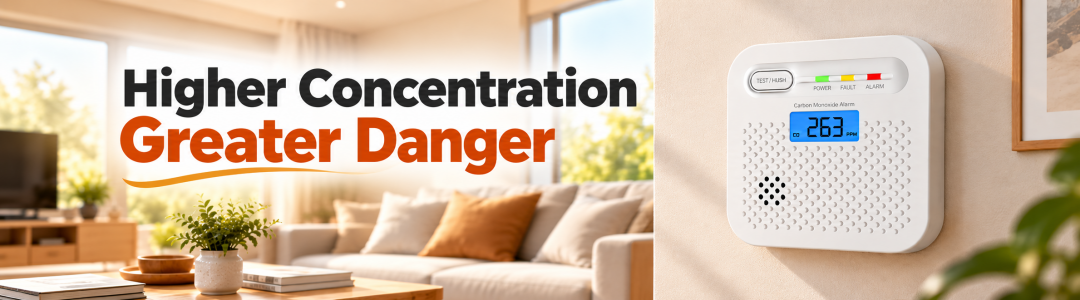
Carbon monoxide concentrations are commonly expressed in parts per million (ppm). For example, 1 ppm means one part by volume of carbon monoxide per million parts by volume of air. In general, higher concentrations and longer exposure times mean greater health risks, but there is no single fixed “poisoning threshold” that applies to everyone.
According to educational materials published by the U.S. Consumer Product Safety Commission (CPSC), at carbon monoxide concentrations of approximately 1–70 ppm, most people may experience no noticeable symptoms, although some people with heart disease may experience worsening chest pain. When concentrations remain above 70 ppm, symptoms such as headache, fatigue, and nausea may gradually become more apparent. When concentrations remain above approximately 150–200 ppm, disorientation and loss of consciousness may occur, and severe exposure may even be fatal.
The figures above are intended to help explain the relationship between concentration and risk. They do not mean that levels below a particular value are completely safe, nor should they be used directly as universal alarm thresholds for residential carbon monoxide alarms. The severity of poisoning also depends on exposure duration, individual health, and environmental conditions.
The U.S. National Institute for Occupational Safety and Health (NIOSH) designates 1,200 ppm as the immediately dangerous to life or health (IDLH) concentration for carbon monoxide. This value is used in occupational safety and emergency response assessments and does not mean that concentrations below 1,200 ppm cannot cause serious harm.
3. Is Long-Term Exposure to Low Concentrations of Carbon Monoxide Safe?
The health effects of carbon monoxide are closely related to exposure duration, so a single instantaneous concentration reading is not sufficient. The World Health Organization (WHO) set a guideline value of 4 mg/m³ for the 24-hour average carbon monoxide concentration in its 2021 Global Air Quality Guidelines. This value is intended for health-based assessments of ambient air quality and is not a threshold for acute poisoning.
Different standards apply in occupational settings. For example, NIOSH recommends an occupational exposure limit of 35 ppm for carbon monoxide, calculated as a time-weighted average over a work shift of up to 10 hours. The corresponding permissible exposure limit established by the U.S. Occupational Safety and Health Administration (OSHA) is 50 ppm, calculated as a time-weighted average over an eight-hour workday.
Ambient air quality guidelines, occupational exposure limits, and the alarm requirements for residential carbon monoxide alarms serve different purposes and should not be treated as interchangeable. The priority for household safety is to minimize unnecessary exposure and prevent the continuous buildup of carbon monoxide.
4. Who Is More Susceptible to the Effects of Carbon Monoxide?
Carbon monoxide affects different groups of people differently. Infants and young children, pregnant women, older adults, and people with chronic heart disease, anemia, or respiratory diseases require particular attention. If carbon monoxide exposure is suspected during pregnancy, the potential effects on the fetus should also be considered, and prompt medical evaluation is important.
It is important to note that members of the same household may respond differently. Even if others have no noticeable symptoms, this does not necessarily mean that the indoor environment is safe.
5. What Household Situations Can Lead to Carbon Monoxide Production?
Improper installation of gas water heaters or gas stoves, equipment malfunctions, blocked exhaust ducts, and insufficient ventilation can all increase the risk. Using coal stoves, charcoal fires, or other fuel-burning equipment in poorly ventilated spaces can also cause carbon monoxide to accumulate.
In addition, fuel-powered generators should not be operated indoors, in basements, or in garages. When a motor vehicle is left running in a garage, its exhaust can create a dangerous level of carbon monoxide exposure even if the garage door is open.
6. How Can Carbon Monoxide Poisoning Be Prevented?
Prevention should begin at the source: install and use fuel-burning appliances correctly, and regularly check their combustion performance, ventilation conditions, and exhaust systems. If equipment operates abnormally, have it inspected and repaired by appropriately qualified professionals. Do not use a gas stove to heat a room, and do not operate charcoal grills, fuel-powered generators, or other equipment unsuitable for indoor use inside the home.
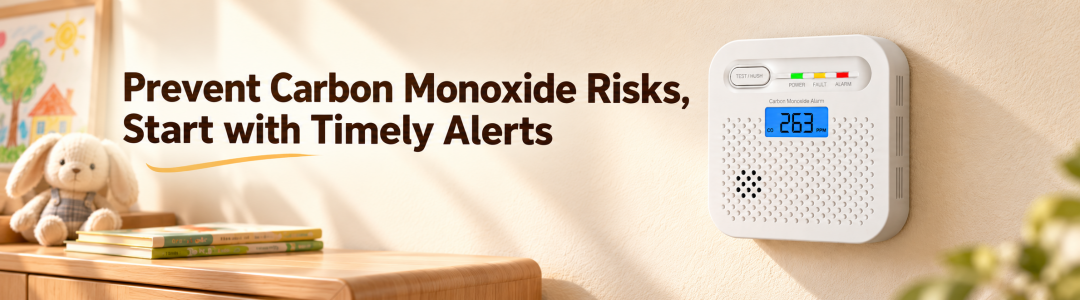
Properly installing carbon monoxide alarms in the home can provide timely warnings of abnormal carbon monoxide buildup. These alarms use sensors to monitor carbon monoxide in the surrounding air and issue alerts according to applicable standards and each product’s alarm logic. Alarm conditions and functions can vary between products, so it should not be assumed that all alarms will sound immediately at the same concentration.
When choosing installation locations, pay particular attention to areas near bedrooms and locations on each floor of the home where warnings are needed, and follow applicable local regulations and product installation requirements. Regularly check that the devices are functioning properly, and replace them promptly when they reach the end of their specified service life. Carbon monoxide alarms are an additional protective measure and cannot replace proper ventilation and equipment maintenance.
7. What Should You Do If Abnormal Carbon Monoxide Levels Are Detected?
If a carbon monoxide alarm sounds or someone exhibits symptoms suggestive of carbon monoxide poisoning, evacuate immediately to a safe outdoor area with fresh air. Do not remain indoors to search for the source of the leak or emissions, and do not ignore the alarm simply because no obvious symptoms are present at the time.
After evacuating, contact local emergency services, such as the fire department or emergency medical services. If headache, dizziness, chest pain, nausea, or changes in consciousness occur, seek medical attention promptly and inform healthcare professionals of possible carbon monoxide exposure. Do not return to the hazardous area until qualified personnel have confirmed that it is safe. Malfunctioning equipment must be inspected and repaired as necessary before being used again.
8.Conclusion
Whether carbon monoxide causes harm cannot be determined from a single concentration reading alone. Concentration, exposure duration, and individual health status all affect the risk. Proper use of fuel-burning appliances, adequate ventilation and exhaust, regular safety inspections, and appropriate installation of carbon monoxide alarms are important measures for reducing the risk of carbon monoxide poisoning in the home.
Post time: Oct-26-2026