



-
What Are the Advantages of a Gateway-Based Water Leak Alarm?
In homes, apartments, vacation rentals, hotels, and property management projects, water leakage is often one of the most difficult risks to detect in time, yet it is also one of the most common causes of property damage. Leaking kitchen pipes, burst bathroom pipes, abnormal washing machine draina...Read more -

How to Combine Smoke, Carbon Monoxide, Water Leak, and Door Magnetic Alarms?
With the growing demand for smart homes and residential security, traditional single-function alarm devices can no longer fully meet the safety requirements of homes, villas, apartments, hotels, property management projects, and other application scenarios. Different risks require different prote...Read more -
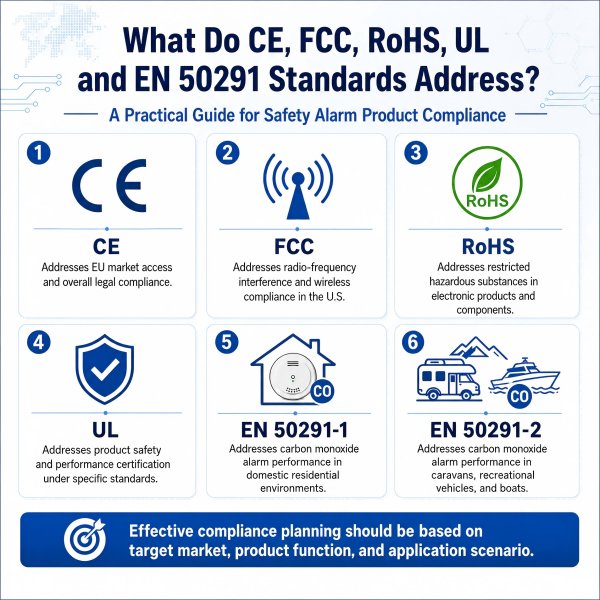
What Issues Do CE, FCC, RoHS, UL, and EN 50291-1/2 Address?
In the export of security alarm products, CE, FCC, RoHS, UL, EN 50291-1, and EN 50291-2 are often mentioned together. However, they address different issues, including market access, radio-frequency interference, environmental compliance of materials, product safety, and carbon monoxide alarm per...Read more -
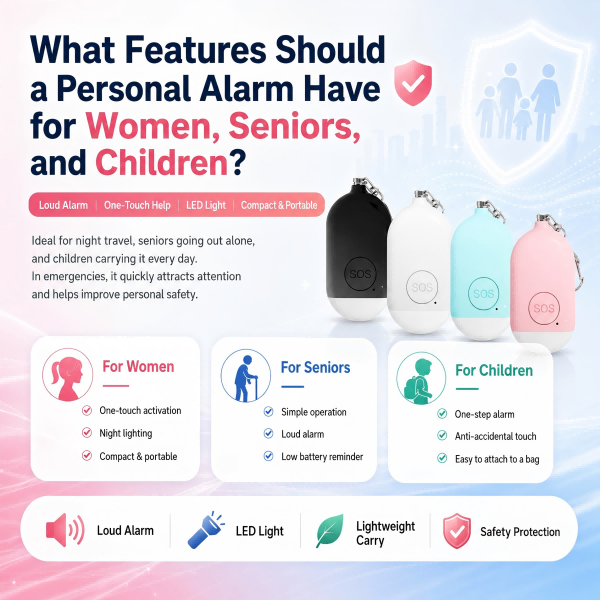
What Features Should a Personal Alarm Have for Women, Seniors, and Children?
As personal safety awareness continues to grow, personal alarms are becoming a common safety aid for women traveling at night, seniors going out alone, and children commuting to and from school. Personal alarms are usually compact and can be attached to keys, backpacks, belts, or other personal i...Read more -
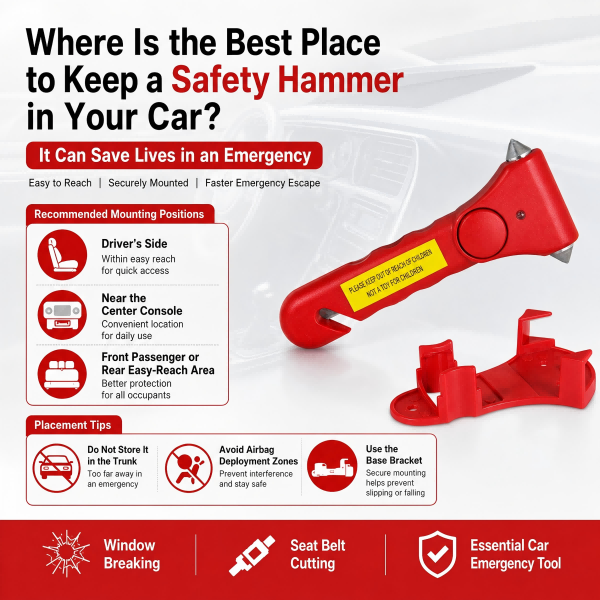
Where Is the Best Place to Keep a Safety Hammer in Your Car? It Could Save Your Life in an Emergency
As cars have become an essential part of everyday travel, more drivers are paying attention to in-vehicle emergency equipment. Fire extinguishers, first-aid kits, reflective vests, and safety hammers are among the most common emergency tools kept in a vehicle. A safety hammer is mainly intended f...Read more -
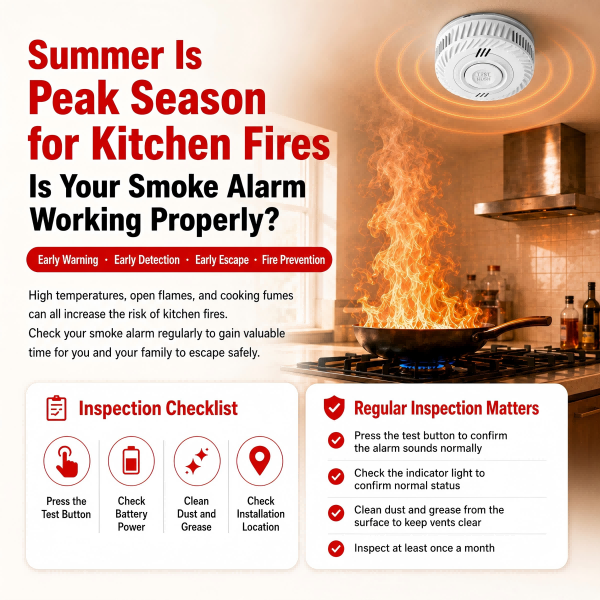
Summer Is Peak Season for Kitchen Fires: Is Your Smoke Alarm Working Properly?
As summer begins, temperatures rise and household electricity consumption increases. Air conditioners, refrigerators, induction cookers, ovens, and other appliances may run for extended periods, while heat, open flames, gas, and cooking oil further increase the risk of a kitchen fire. The kitchen...Read more
